This piece, titled ‘The Great Elephant Hunt’ by Patricia Young, is one of the many artifacts held at the Columbia Basin Institute of Regional History. As we approach the annual
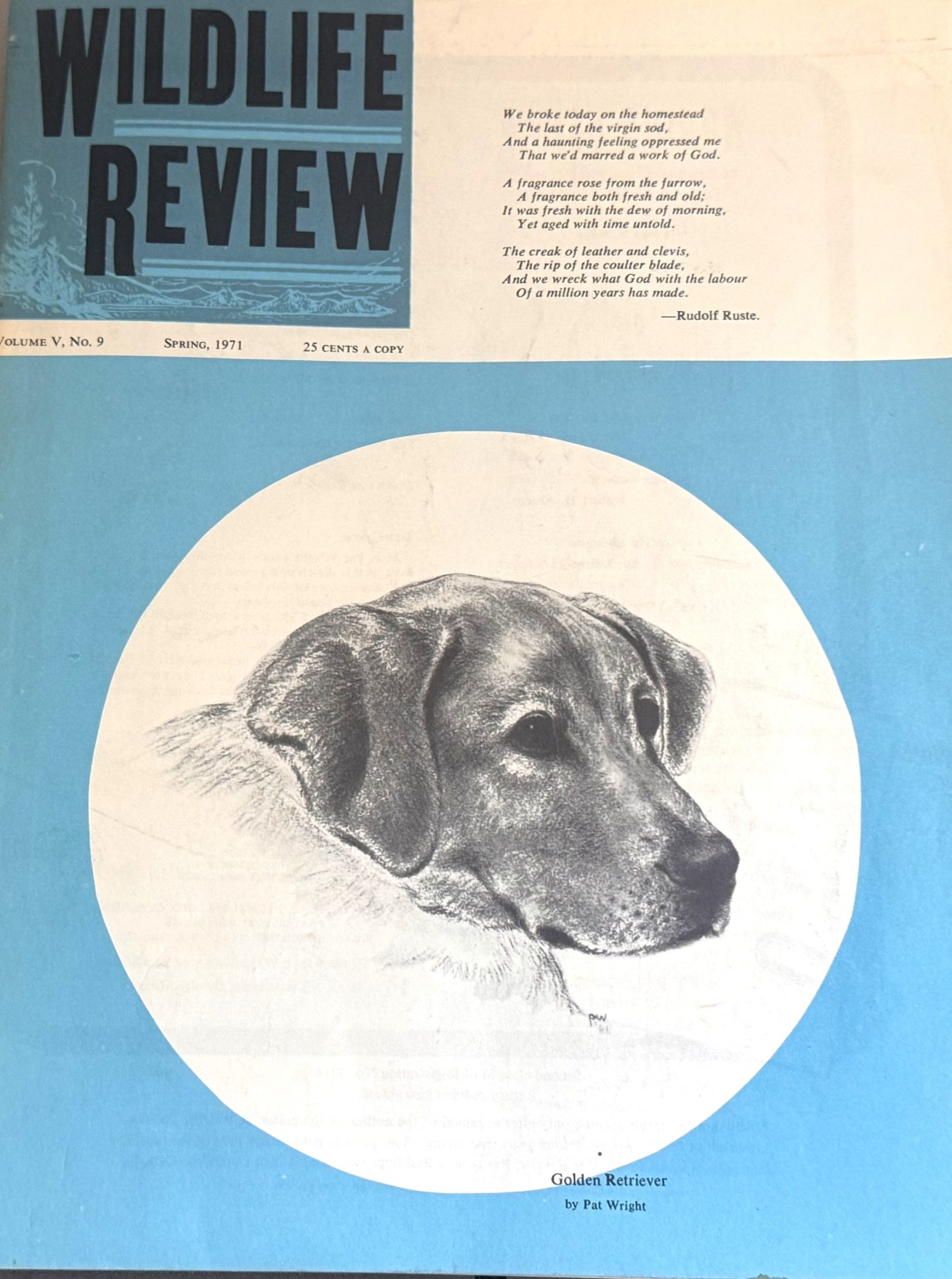
Ed Fest to be held at Rotary Park on September 18 and 19, here is a nod to ‘Wildlife Review’s’ Spring 1971 edition. At the time of its publication, it cost 25 cents a copy.
The cover featured a sketch of a Golden Retriever by Pat Wright, and a poem accompanied the top left-hand corner, which read:
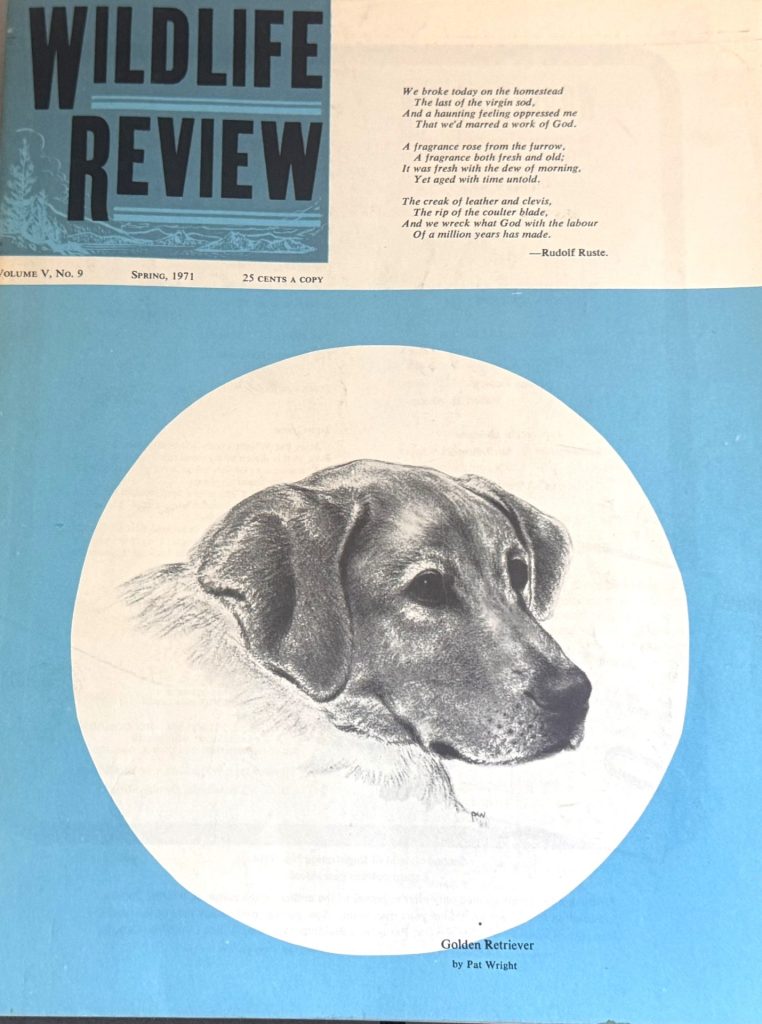
Wildlife Spring Review – 1971
We broke today on the homestead.
The last of the virgin sod,
And a haunting feeling oppressed me
That we’d marred a work of God.
A fragrance rose from the furrow,
A fragrance both fresh and old:
It was fresh with the dew of morning,
Yet aged with time untold.
The creak of leather and clives,
The rip of the coulter blade,
And we wreck what God with the labour
Of a million years has made – Rudolf Ruste
The Great Elephant Hunt
by Patricia Young
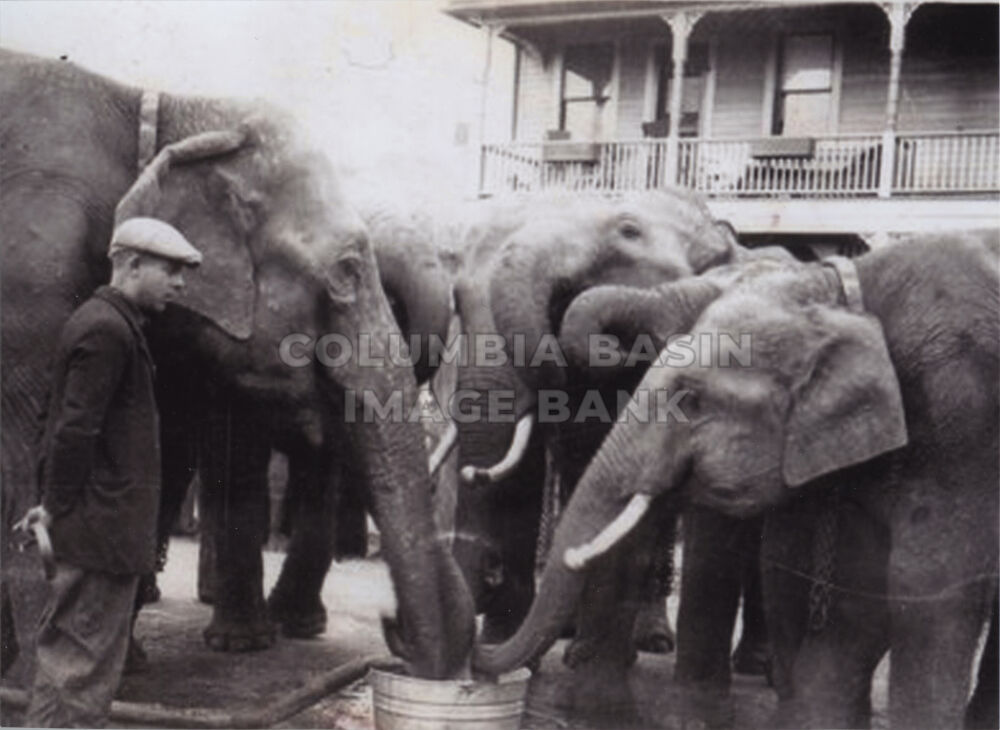
Bear hunts we’ve heard about, along with those people who swear that the Sasquatch is real, but a six-week elephant hunt? Yes, sir, it happened back in 1926 and involved some 500 hunters from both Canada and the United States.
It all began when the Sells-Floto Circus was on its way to Cranbrook for a much-touted engagement. Between higher altitudes and smoke from forest fires, the 14 animals became restless and irritable. They stampeded first at Edmonton, then at Calgary, but were recaptured on both occasions without too much trouble.
But when the circus arrived at Cranbrook on August 6, 1926, the rarified air at 3,013 feet, plus smoke from a nearby forest fire, caused the animals to panic once again. It happened when a small dog got loose among the elephants. Seven of them broke their chains while circus hands were busy setting up the tents and lining up the cages of other animals.
Since a trained elephant is worth up to $20,000, all work stopped immediately. When the seven animals reached the outskirts of the town and disappeared into the woods, further alarms went out, including a wire to all trains east which read: “Keep lookout for elephants on track. Advise if sighted from first telegraph office, giving location.”
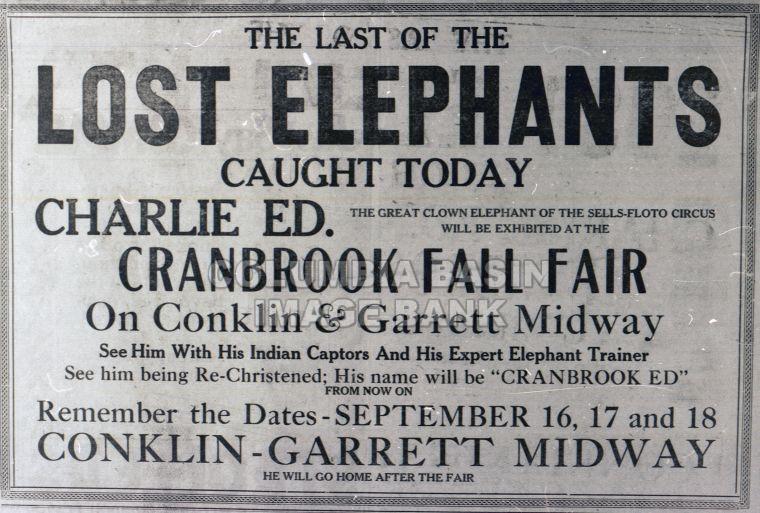
Cranbrook Elephant Stampede : The Great Elephant Hunt – newspaper ad in 1926 local newspaper.
As days went by, the circus managers cancelled their bookings to intensify the elephant hunt. They sent post-haste to Denver, Colorado, for “Cheerful” Gardener, an animal expert, who arrived on August 9, 1926. Local First Nations were the first to spot the missing animals, including an Indian woman, 60-year-old Mary Jane. The elephants Cicero, Bessie, and Virginia wandered into her apple orchard in search of food, sending Mary Jane scurrying up a tree for safety. Eventually, Mary Jane found herself tossing apples to the two cows and one bull elephant, enjoying her own private circus when she realized the elephants caught the apples in mid-air. When she found that Cicero would actually take the apple from her hand, she climbed down from the tree, supplying apples while she crawled through the fence. She then tied his two front feet together with her shawl and sent for the circus authorities. For her trouble and ingenuity, Mary Jane was given a reward of $300.
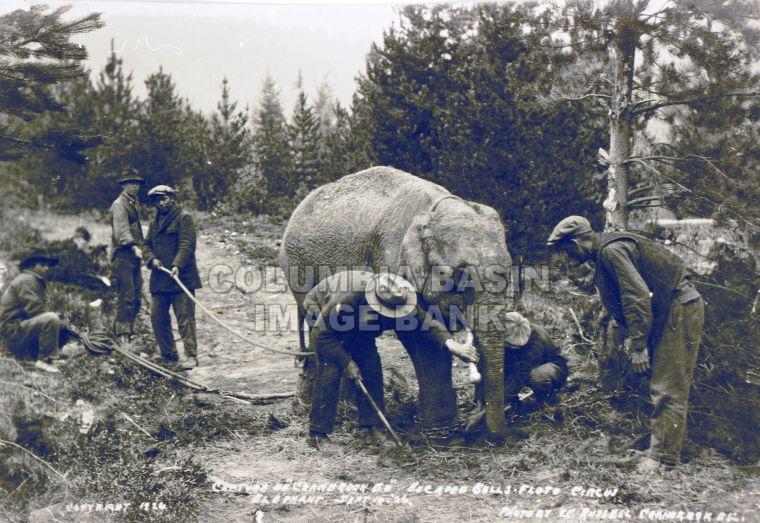
Capture of “Cranbrook Ed” : The Great Elephant Hunt – capture of escaped bull elephant, Sept. 1926. Photo by V.C. Russell.
While Freida was captured not too far outside Cranbrook, three others got as far as Lake Windermere and Kootenay Lake, over 50 miles away. Tillie was not captured until after she had attacked an Indian on horseback in the Jap Lake area, almost killing the man’s horse. The young Indian went for help, and Tillie was lured back into a cage with decoy elephants.
The elephant cow, known as Myrtle, died under unfortunate circumstances. An Indian tracker found her at the bottom of a 40-foot precipice into which she had fallen. He tried to bring her up with a rope and chain, but Myrtle only attacked the lad for his trouble. Because of her starvation and exposure, Myrtle developed pneumonia and, although she was given morphine, died before she could be brought out of the woods.
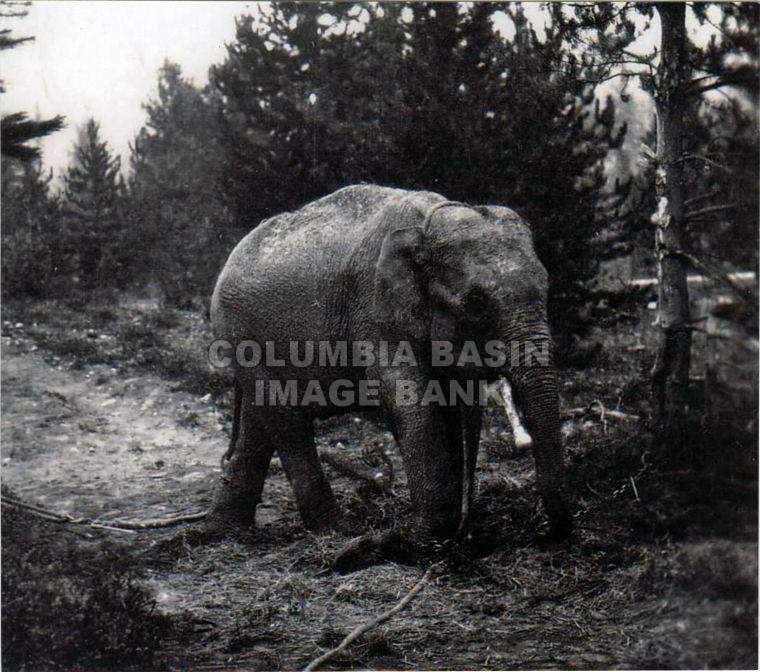
The last of the seven to be captured was Charlie Ed, a little, trick elephant who was at large for a total of six weeks. When finally found, Charlie Ed was being held at bay in an alfalfa field by a tiny field mouse! For some reason or another, Charlie’s owners promptly shipped him back by express to Santa Rosa, California, at a reported cost of $1200.
All in all, the six-week elephant hunt cost about $50,000. Cancelled bookings accounted for $20,000. Myrtle’s death, rewards for captures, and compensation for damage accounted for the rest. So ended British Columbia’s first and only elephant hunt, henceforth to be commemorated by an annual trap and skeet-shoot event, with hunters competing from British Columbia, Alberta, Washington, and Idaho.
Related Posts
August 27th, 2026

April 3rd, 2026

December 29th, 2025

 Columbia Kootenay Cultural Alliance